
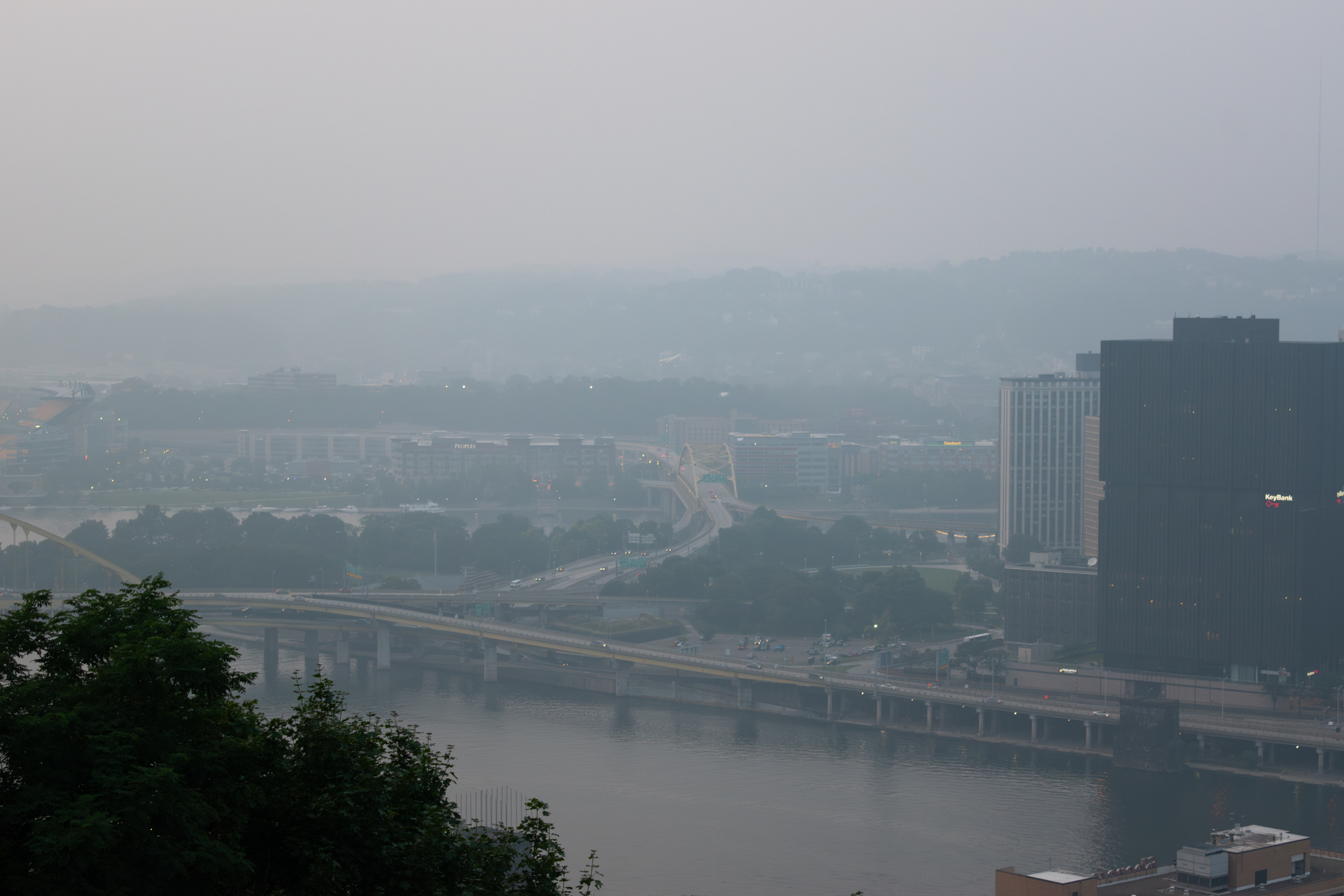
AccuWeather’s AI-Powered Air Quality Forecasting: Setting the New Standard
In the ever-evolving field of weather forecasting, few elements are as critical as forecasting air quality during extreme events like wildfire smoke outbreaks. AccuWeather is a pioneer in this space and is now launching a significant update to its leading AI-based air quality model, reaffirming its position as a front-runner in AI-driven environmental forecasting, backed by Proven Superior Accuracy™.
The Challenge: Precision During Critical Episodes
Air quality forecasting isn’t just about knowing whether it will be a “bad air day.” It’s about accurately forecasting when pollutants reach dangerous levels, especially during episodic events such as wildfires. As Dr. Boris Quennehen, Applied Meteorologist at AccuWeather, puts it:
“I am excited about this project because we are building for the first time an AI-based air quality model able to forecast high concentration episodes. This is, to my knowledge, unprecedented, and it is, to me, the goal of air quality modeling, as we want to be accurate when there is a potential health impact for our people, communities and businesses”
A New Generation of AI Architecture
The journey began with AccuWeather’s initial air quality model, developed in 2020—a foundational effort that proved AI could rival traditional physics-based models. The latest upgrade marks an even more substantial leap forward. The updated model features an enhanced architecture that includes U-Net, ConvNeXT, and MaxViT algorithms. These are specially selected for their ability to capture both local and regional patterns in 2D spatial data, which is essential for accurate air quality forecasting.
Data, Redefined
One of the most transformative changes was how data from monitoring stations is integrated. Instead of blending these data with Copernicus model outputs indiscriminately, the new approach uses the eight nearest monitoring stations for each grid cell and inputs Copernicus data independently. This restructuring enhances data fidelity and spatial precision.
The training dataset was also nearly doubled, with a richer inclusion of wildfire smoke episodes, enabling the model to better generalize to future events.
Validated Excellence
The updated model underwent rigorous testing against its predecessor using two custom evaluation frameworks: a general performance framework and a smoke-specific one. The results were clear, the new AccuWeather air quality model significantly outperforms the original across all metrics and pollutants, particularly during high-concentration episodes.
A Strategic Advantage
AccuWeather’s edge doesn’t stop at technical innovation. The company has cultivated the most comprehensive database of air quality monitoring station data since 2015, giving its models a foundational advantage no competitor can easily replicate.
Moreover, the model benefits from deep interdisciplinary collaboration between meteorologists, data scientists, and engineers, ensuring that the solutions are not just technologically advanced but also operationally effective and user-centric drawing upon the best of AccuWeather’s technologies, innovation, creativity and entrepreneurship.
What It Means for the Future
This breakthrough is more than a technical success; it’s a glimpse into the future of environmental risk communication. By integrating domain expertise with advanced AI, AccuWeather is setting a new industry benchmark for accuracy, responsiveness, and public health relevance, and this is just a stepping stone to our next innovation. We are already working on the next generation of our high-resolution model that will provide hourly forecasts at an unmatched, ultra-high resolution for North America and Europe.
Whether you’re a city planner, health official, or a concerned citizen, this innovation means better preparedness, faster response times, and ultimately, healthier communities.
Stay tuned—because with AI at the helm, the forecast is clear: the future of air quality prediction is bright.
Interested in how AccuWeather’s AI expertise can support your business or community?
Let’s talk